

Your Septic Inspection Found a D-Box Problem: What Happens Next?
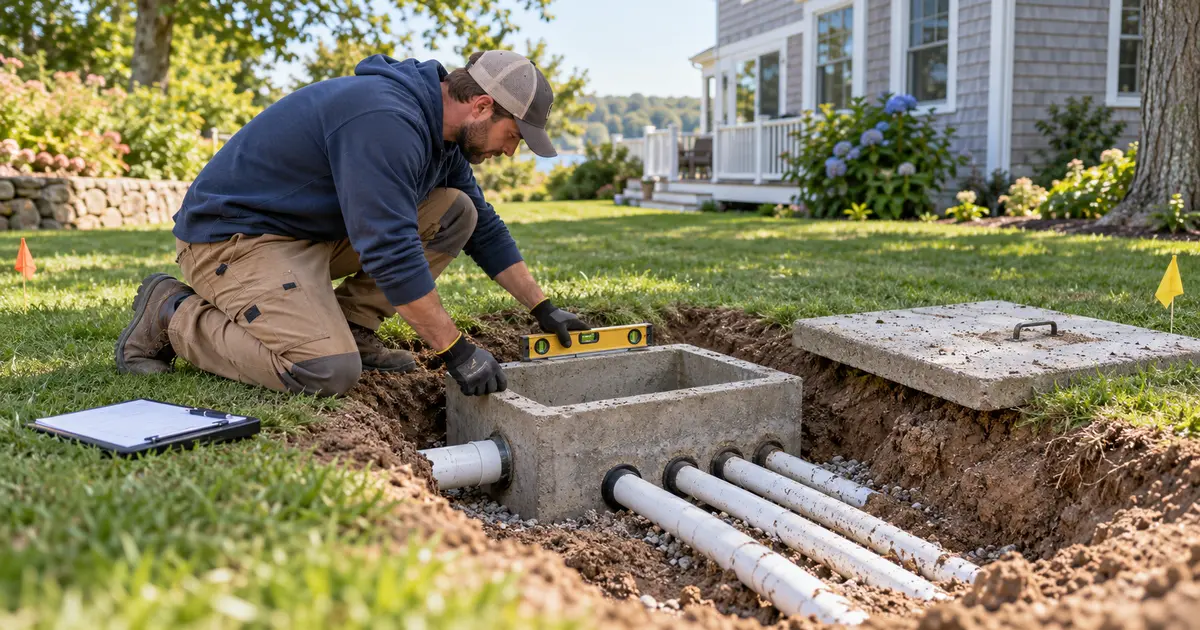
Quick answer: A distribution-box finding does not automatically mean the septic tank, drain field, or complete system has failed. Depending on what the inspection found, the D-box may need to be releveled, repaired, or replaced. Before the scope is finalized, the box, pipe connections, flow to the laterals, and available evidence about the drain field should be evaluated together.
Already have an inspection report? Send ATS Environmental the relevant pages, photographs, property address, and any repair or closing deadline. We can review the finding and explain the likely next step. Call 800-440-8265 or send ATS your septic inspection report online.
What Does a D-Box Finding Mean?
In a conventional septic system, the distribution box—often called the D-box—sits between the septic tank and absorption field. The NJDEP explains that it divides effluent among the field’s laterals.
When the box is unlevel, damaged, obstructed, or no longer watertight, one section of the field may receive more wastewater than another. That can place unnecessary stress on part of the absorption area, but the D-box condition alone does not establish that the field has failed.
How to Read Common D-Box Language in Your Inspection Report
Septic reports describe observed conditions, and each finding points to a different next step.
“Distribution Box Is Unlevel” or “Uneven Flow”
The box has shifted or its outlets are no longer distributing flow evenly. A structurally sound box may be repairable, but its connections and support also need to be checked.
“Cracked,” “Deteriorated,” or “Not Watertight”
The box may have structural damage or allow groundwater and soil to enter. Whether a limited repair is appropriate depends on the location and severity of the damage. A crumbling, collapsed, or substantially deteriorated box generally points toward replacement.
“Solids or Debris Present”
Solids may indicate a problem with the tank outlet baffle, effluent filter, maintenance history, or another upstream component. The cause should be investigated instead of simply cleaning the box.
“High Liquid Level,” “Standing Water,” or “Poor Flow”
Liquid above the expected outlet level or wastewater backing up through the distribution system requires further evaluation. Possible causes include an obstructed outlet, damaged piping, excessive hydraulic loading, or a drain field that is slow to accept flow.
“Broken or Disconnected Outlet”
An outlet or lateral connection may need to be repaired or reconnected. The contractor should also determine whether soil or roots entered the opening and whether the affected lateral remains usable.
“Further Evaluation Recommended”
This usually means the inspector could not fully verify the box or related components. New Jersey’s septic inspection guidance calls for an exposed D-box to be evaluated for condition, level, solids, watertightness, and distribution. A known box that cannot be located requires further investigation.
Does a Bad D-Box Mean the Drain Field Failed?
No—not by itself. The D-box and absorption field are different parts of the system. A component-level problem can often be corrected without replacing the septic tank or drain field.
However, uneven distribution may have overloaded one section of the field. Additional evaluation becomes more important when the report or property also shows:
- Sewage or wastewater surfacing over the absorption area
- Persistent sewage odors outside
- Slow drainage or repeated backups inside the home
- Multiple laterals with elevated liquid levels
- Wastewater returning toward the tank or D-box
- A flow test that indicates poor acceptance by the disposal area
Further evaluation may include observing flow, checking liquid levels, probing the disposal area, or inspecting accessible piping. A camera can help in some pipes, but it does not establish the condition of the entire septic drain field.
What Should You Do After the Inspection?
- Read the complete report. Do not rely only on the summary page. Review the observations, photographs, flow-test results, and recommendations involving the tank, D-box, piping, and drain field.
- Confirm what was directly inspected. Determine whether the box was located and exposed, which outlets were visible, and whether the field was evaluated under load.
- Get a property-specific scope. A contractor should verify the reported condition before promising a repair, replacement, price, or completion date.
- Confirm local requirements. Determine which permits, inspections, or approvals apply and whether a follow-up inspection will be needed.
- Complete and document the work. Keep the proposal, permit, invoice, photographs, inspection records, and any other closeout documentation with the property’s septic records.
ATS’s septic distribution box repair and replacement page explains how the condition is verified and how component-level work is completed.
Can the D-Box Be Repaired, or Must It Be Replaced?
A structurally sound box may be repairable when the problem is limited to its level, a connection, a flow equalizer, or a localized obstruction. Replacement is more likely when the box is cracked, collapsed, substantially deteriorated, or damaged around multiple outlets.
The final recommendation should be based on the exposed box, its connections, and the surrounding system—not on a generic rule.
How Much Does D-Box Repair or Replacement Cost?
Many straightforward D-box repairs or replacements fall within the low thousands, but no single price applies to every property. Cost depends on:
- The box’s depth and location
- Equipment access to the work area
- Whether the box can be repaired or must be replaced
- The number and condition of its outlet connections
- Rock, roots, groundwater, or damaged adjacent piping
- Permit, inspection, and surface-restoration requirements
Providing the inspection report before the site visit helps ATS understand the reported condition and prepare a more useful estimate. Many uncomplicated D-box projects can be completed in approximately one to two working days once access, scope, and applicable approvals are clear.
Working against a closing deadline? Include the inspection-response date and expected closing date when you contact ATS. We will tell you what can realistically be evaluated and completed within that schedule.
What Buyers and Sellers Should Address Before Closing
A D-box finding does not automatically stop a New Jersey home sale, but it can affect negotiations, lender requirements, municipal approvals, and timing. Depending on the contract, possible responses include completing the repair, providing a credit, adjusting the price, or establishing an escrow.
Buyers and sellers should involve their real-estate attorneys and, when applicable, their lenders. From the septic side, the goal is a verified scope, realistic schedule, and clear documentation. Learn more about handling a septic finding during a home sale.
What New Jersey Permits Are Required?
New Jersey septic systems are regulated under N.J.A.C. 7:9A and administered through the local administrative authority, generally a municipal or county health department. NJDEP states that local health departments issue permits for septic-system construction, alteration, and repair. The exact submittal, inspection, and closeout requirements depend on the proposed work and local authority.
Do not assume that a minor component repair can proceed without approval. ATS can help identify the requirements that apply to the property and proposed scope.
Why Property Owners Call ATS Environmental
- More than 30 years of New Jersey experience with septic inspection findings, repairs, and replacement projects
- Prompt review of inspection-related problems and real-estate deadlines
- Repair-first recommendations when a component-level solution is appropriate
- Clear scopes based on verified site conditions
- Help coordinating applicable permits, inspections, and documentation
Frequently Asked Questions
Does a D-Box Finding Mean the Septic System Failed?
No. A D-box finding identifies a concern with one part of the system. The box may be repairable or replaceable without replacing the tank or field, but the surrounding piping and drain field should be considered before the scope is finalized.
Does the Inspection Report Provide Enough Information for a Final Quote?
Not always. The condition, depth, connections, access, and surrounding piping may need to be verified before a final scope is established.
Should the Drain Field Be Evaluated Before Replacing the D-Box?
Yes. Additional evaluation is especially important when there are elevated liquid levels, poor flow, sewage odors, surfacing wastewater, backups, or other signs of a broader problem.
Who Pays for D-Box Repair During a Home Sale?
That is negotiable and depends on the purchase contract. The seller may complete the work, the buyer may accept a credit, or the parties may reach another arrangement with guidance from their attorneys and real-estate professionals.
Can a New Jersey Closing Proceed Before the Repair Is Completed?
Possibly, but the answer depends on the contract, lender, municipality, repair scope, and parties involved. Some transactions use a credit or escrow, while others require the work and documentation before closing.
Does a D-Box Repair Require a Permit?
Local approval is generally required for septic-system alteration or repair in New Jersey. The specific permit and inspection requirements depend on the scope and the local administrative authority.
Send ATS Your Septic Inspection Report
If your report identifies a cracked, deteriorated, unlevel, or poorly flowing distribution box, ATS Environmental can review the findings, verify the condition, and provide a clear repair or replacement scope.
For the fastest response, include:
- The property address
- The relevant inspection report pages
- Available photographs or video
- Whether you are the buyer, seller, or current homeowner
- Your repair, inspection-response, or closing deadline
- Your best telephone number and email address
Call 800-440-8265 or contact ATS Environmental online to request help with a D-box inspection finding.
Last reviewed: October 2026