

Can a Septic System Contaminate Well Water in New Jersey?
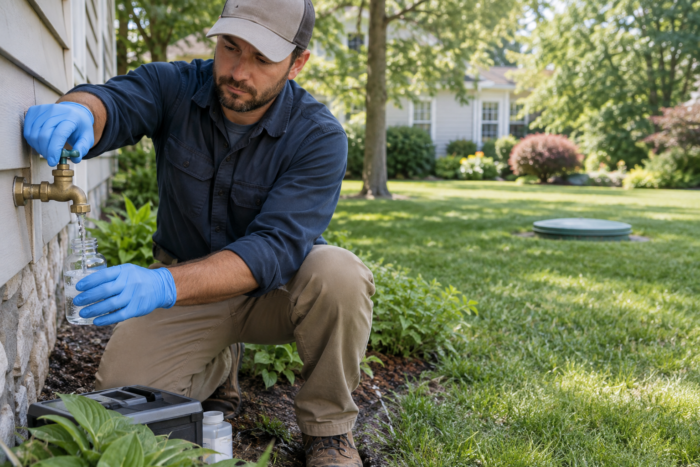
Yes. A failing, poorly maintained, or improperly located septic system can contaminate a nearby private well with bacteria, nitrates, and other pollutants. A properly designed and functioning system substantially reduces that risk, but water can look, smell, and taste normal even when a problem is present. Laboratory testing is the only reliable way to know what is in your well water.
If you are concerned about your water—or your septic system is backing up, leaking, or surfacing wastewater—ATS Environmental can help with private well water testing, septic inspections, and septic repair or replacement.
Call 800-440-8265 or contact ATS Environmental online to discuss your property and the appropriate next step.
How Can a Septic System Affect a Private Well?
A septic system treats household wastewater in two stages. Solids settle inside the septic tank, and the remaining effluent moves to the disposal field, where soil provides additional treatment before the water reaches groundwater.
When the system is properly sited, installed, used, and maintained, it should not adversely affect water quality. When a tank, pipe, distribution box, or disposal field fails, however, inadequately treated wastewater may reach the ground surface or groundwater. If a drinking-water well is nearby, contaminants may enter the water supply.
The risk depends on more than distance alone. Soil conditions, fractured bedrock, groundwater flow, well construction, system age, wastewater volume, and the severity of the septic problem can all influence whether contamination reaches a well.
Which Contaminants Are Associated With Septic Wastewater?
The contaminants of greatest concern include:
- Total coliform bacteria: These organisms are used as an indicator that a well may be vulnerable to contamination.
- E. coli: A positive result indicates fecal contamination and requires prompt attention.
- Nitrate: Nitrate can enter groundwater from septic wastewater, fertilizer, animal waste, and other sources. It has no color, odor, or taste.
- Other pathogens and wastewater contaminants: Viruses, chemicals, and nutrients may also affect groundwater when wastewater is not adequately treated.
The U.S. Environmental Protection Agency identifies pathogens and nitrates among the most serious documented water-quality problems associated with poorly functioning septic systems.
Does a Positive Well Test Prove the Septic System Is the Cause?
No. A positive bacteria or nitrate result confirms a water-quality problem, but it does not identify the source by itself.
Contamination may also result from a damaged or poorly sealed well, surface runoff, flooding, fertilizer, livestock or wildlife waste, nearby land use, or an error during sample collection. The location and condition of the well and septic system should be evaluated together with the laboratory results.
This distinction matters because disinfecting a well may address bacteria temporarily without correcting an ongoing contamination source. The right response is to test the water, investigate the likely pathway, correct the underlying problem, and retest as directed.
How Far Must a Well Be From a Septic System in New Jersey?
New Jersey’s minimum separation distance depends on the septic component. Under N.J.A.C. 7:9A-4.3, the standard minimum distances from a well are:
- Septic tank to well: 50 feet
- Distribution box and associated distribution piping to well: 50 feet
- Disposal field to well: 100 feet
- Seepage pit to well: 150 feet
Some distances may be increased because of coarse soil, fractured rock, or site-specific conditions. The disposal-field setback may be reduced only under limited conditions approved by the administrative authority. A local health department or qualified professional should confirm the requirements that apply to a particular property.
Warning Signs That Call for Well Testing and Septic Evaluation
You cannot diagnose septic contamination by sight, smell, or taste. However, the following conditions justify prompt testing or system evaluation:
- Sewage is backing up inside the home.
- Wastewater is surfacing above the tank or disposal field.
- The yard is persistently wet or unusually lush over the septic area.
- Sewage odors are present indoors or outside.
- Several fixtures drain slowly or gurgle, especially during wet weather.
- The well was flooded, damaged, or recently repaired.
- A water test detected coliform bacteria, E. coli, or elevated nitrate.
- The well or septic system is old, its location is uncertain, or maintenance records are unavailable.
A change in color, taste, or odor is also a reason to test, but it does not specifically point to the septic system. For example, a rotten-egg odor is often associated with hydrogen sulfide rather than fecal contamination. Testing replaces guesswork with a laboratory result.
Why Does a Septic System Act Up After Heavy Rain?
Problems during or after heavy rain may indicate a saturated disposal field, a seasonally high water table, stormwater entering the system, damaged risers or seals, or groundwater leaking into a cracked tank.
Excess water can hydraulically overload the system and prevent effluent from receiving adequate treatment in the soil. If the problem repeatedly appears in wet weather, conserve water and schedule a septic system inspection. Additives cannot repair a cracked component, restore a failed disposal field, or lower the groundwater table.
What Should You Do if You Suspect Septic Contamination?
- Protect the household. If a test detects E. coli or you have been advised that the water may be unsafe, use an alternative drinking-water source and follow the laboratory’s or local health department’s instructions until corrective work and retesting confirm the water is safe.
- Test the well through a certified laboratory. The appropriate panel depends on the property, the symptoms, the well’s location, and whether the test is for routine monitoring or a real estate transaction.
- Have the septic system evaluated. An inspection can identify visible leakage, a damaged tank, a failed pipe, an unlevel or deteriorated distribution box, or problems in the disposal field.
- Investigate other possible sources. Well defects, runoff, flooding, fertilizer, and nearby land uses may need to be considered before assigning a cause.
- Correct the source and retest. Depending on the findings, the solution may involve well disinfection or repair, a limited septic repair, or a complete septic system replacement.
Private Well Testing During a New Jersey Home Sale or Lease
New Jersey’s Private Well Testing Act requires testing for specified contaminants when covered properties with private wells are sold or leased. The required parameters vary based on the property’s location and other factors.
A PWTA test provides important information for a transaction, but it is not a septic inspection and does not determine why a contaminant is present. When results and site conditions raise concerns, buyers and sellers may need both New Jersey well water testing and a separate evaluation of the septic system.
How Much Do Well Testing and Septic Repairs Cost?
There is no single price for investigating a possible well-and-septic problem. The cost of water testing depends on the contaminants included in the laboratory panel. Septic costs depend on which component has failed, excavation depth, site access, soil and groundwater conditions, permits, and whether the system can be repaired or must be replaced.
A component-level repair may cost far less than replacing an entire system. Starting with appropriate testing and a proper inspection helps define the problem before you commit to a larger scope of work.
How to Reduce the Risk of Well Contamination
- Have the septic system inspected and pumped on an appropriate schedule.
- Repair leaking plumbing fixtures and avoid overloading the system with excessive water use.
- Direct roof drains, sump pumps, and surface runoff away from the disposal field and well.
- Do not drive, park, build, or plant deep-rooted trees over septic components.
- Keep paint, solvents, pesticides, medications, and other hazardous materials out of household drains.
- Use drain and cleaning products according to their labels, and investigate recurring slow drains instead of repeatedly treating the symptom.
- Protect the well cap and casing from damage, runoff, and flooding.
- Keep records of well tests, septic pumping, inspections, repairs, and system locations.
Well Water and Septic Services From ATS Environmental
ATS Environmental has more than 30 years of experience helping New Jersey property owners understand and resolve well and septic concerns. Our services include:
- Private well and PWTA water testing
- Septic system inspections and mapping
- Septic repair, including distribution box repair and replacement
- Septic system installation and replacement
- Septic tank removal
Because ATS provides both water testing and septic services, our team can help you move from an uncertain symptom or test result to a clearer next step.
Frequently Asked Questions
Can a septic system contaminate a private well?
Yes. If a septic system is failing, improperly located, or not adequately treating wastewater, contaminants can reach groundwater and affect a nearby well. Proper siting, installation, maintenance, and operation reduce the risk.
What should I test for if I am concerned about septic contamination?
Total coliform bacteria, E. coli, and nitrate are common starting points, but the appropriate test panel depends on the property and the suspected source. A water-testing professional or local health department can help determine what should be included.
Does a positive coliform result mean the septic system failed?
No. A positive coliform result shows that the well may be vulnerable to contamination, but it does not identify the source. The well construction, recent weather, sample collection, surrounding land uses, and septic system should all be considered.
How far should a septic system be from a well in New Jersey?
The standard minimum is 50 feet from a well to a septic tank or distribution box and 100 feet from a well to a disposal field. A seepage pit generally requires 150 feet. Site conditions and approved exceptions can affect the requirement, so confirm the applicable setback with the local administrative authority.
Can heavy rain cause septic contamination?
Heavy rain can saturate a disposal field or contribute to water entering damaged septic components. The resulting hydraulic overload can cause backups, surfacing wastewater, or inadequate treatment. Wet-weather problems should be professionally evaluated.
Can ATS test my well and inspect my septic system?
Yes. ATS Environmental offers private well water testing and septic inspections, along with septic repair, replacement, and tank removal services.
Schedule Well Water Testing or a Septic Evaluation
If you are concerned that a septic problem may be affecting your private well, do not rely on taste, odor, or appearance. Test the water and evaluate the system so the source can be identified and addressed.
Call ATS Environmental at 800-440-8265 or contact us online. Include the property address, your concern or test results, and any real estate deadline so we can help determine the appropriate service.