


Clay Soil and Septic Systems in Northern New Jersey
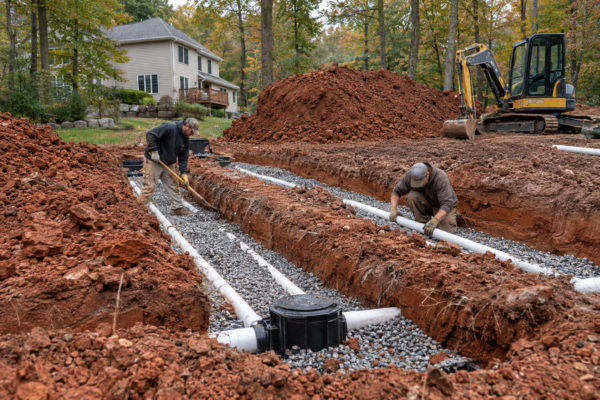
Clay soil can make septic system installation and drainage more challenging, but it does not automatically make a property unsuitable for septic. The right design depends on the soil profile, permeability, seasonal high-water table, bedrock depth, slope, available space, and the home’s required wastewater capacity.
Some clay-heavy properties can support a conventional system when suitable soil and adequate separation are available. More difficult sites may require a larger disposal area, pressure dosing, imported suitable soil, a mounded design, or an approved advanced treatment component.
If you have soil-test results, engineered plans, or a septic inspection report, ATS Environmental can review the available information and help you understand the next step. Call 800-597-0274 or contact ATS Environmental online.
Why Does Clay Soil Create Septic Problems?
A septic system does more than store wastewater in a tank. After solids settle in the tank, liquid effluent moves through the distribution system and into the disposal field. The soil below and around that field must accept and treat the wastewater.
Clay contains very small particles that can pack tightly together. This can reduce the rate at which water moves through the soil. If a disposal field receives wastewater faster than the surrounding soil can accept it, effluent may accumulate in the field and eventually contribute to slow drainage, backups, ponding, or wastewater surfacing in the yard.
The disposal field—not usually the septic tank—is the component most directly affected by slow-draining clay soil. A sound tank may continue holding and separating waste properly even when the field can no longer disperse effluent at the required rate.
Does Clay Soil Always Require a Special Septic System?
No. Soil texture is only one part of the site evaluation. A property may contain clay in one layer and more suitable material at another depth or in another portion of the lot. The available soil depth, permeability, groundwater conditions, slope, and setbacks must all be considered before a system can be selected.
According to the U.S. Environmental Protection Agency, the appropriate septic system depends on site and soil conditions, lot size, slope, household size, local requirements, and other factors. That is why a system that works on one Northern New Jersey property may not be appropriate for another property nearby.
When the site supports it, a conventional gravity system may still be the most practical option. When soil or site limitations are more significant, the design may need to change how effluent is treated, distributed, or placed within the usable soil.
How New Jersey Evaluates Soil for a Septic System
New Jersey septic systems are regulated under N.J.A.C. 7:9A, Standards for Individual Subsurface Sewage Disposal Systems. Before a new disposal field or replacement system is designed, the site must be evaluated to determine whether the soil and location are suitable.
The evaluation may include:
- Soil profile pits or borings to identify soil horizons, texture, structure, color, coarse fragments, and other characteristics
- Permeability testing to evaluate how water moves through the proposed zone of treatment and disposal
- Seasonal high-water-table evaluation using observed soil conditions and site information
- Bedrock and limiting-zone depth to determine how much usable soil is available
- Slope and grading review to determine whether gravity distribution is practical
- Property setbacks and available area for the tank, distribution components, and disposal field
- Residential design flow based largely on the home’s bedroom count
New Jersey’s soil-evaluation rules generally require at least two soil profile pits for each proposed disposal field, although qualifying soil borings may substitute for the second pit in certain circumstances. These on-site findings are more useful than a generalized soil map when designing a system for a specific property.
Septic System Options for Clay-Heavy Properties
The best system is the simplest design that satisfies the property’s actual site conditions and applicable requirements. Depending on the results, an engineer may consider one or more of the following approaches.
Conventional Gravity Distribution
A conventional system may remain possible when the property has adequate suitable soil, permeability, depth, area, and slope. Clay on a property does not automatically rule it out.
Pressure Distribution or Dosing
A pump can deliver controlled doses of effluent across the disposal area. More even distribution helps prevent one section of the field from receiving a disproportionate share of the flow.
Soil-Replacement or Mounded Designs
When suitable native soil is limited, an engineered design may use approved fill to create the necessary treatment and disposal zone. The field may be partially or fully elevated depending on the site’s limiting conditions.
Advanced Pretreatment
On some constrained properties, an approved treatment component may improve effluent quality before it reaches the disposal field. Advanced treatment does not make every lot approvable, and it does not eliminate the need for a properly designed disposal area.
The final choice should come from the soil results and engineered design—not from selecting a system type before the property has been evaluated.
Signs of a Septic Problem on a Clay-Heavy Lot
Clay soil does not prove that a septic system is failing. However, slow-draining soil can make an overloaded or deteriorated system more noticeable, especially during wet weather.
Warning signs include:
- Sewage backing up into plumbing fixtures
- Multiple fixtures draining slowly or gurgling
- Sewage odors near the tank or disposal field
- Persistent wetness, ponding, or unusually lush growth over the field
- Wastewater surfacing in the yard
- Problems that repeatedly appear during or after heavy rain
- Leakage into or from the tank, pipes, or distribution box
New Jersey identifies ponding or breakout of sewage, sewage backups not caused by an interior blockage, and leakage from septic components among the indications of a potentially malfunctioning system. If wastewater is surfacing, minimize system use and arrange professional service promptly.
A septic inspection can help distinguish a localized component problem from a disposal field that is no longer functioning properly.
Why Clay-Soil Problems Often Get Worse After Rain
Clay-rich soil may remain wet longer after heavy rain. If the disposal field is already near its hydraulic capacity, saturated surrounding soil can leave less room for septic effluent to move and be treated.
Wet-weather problems can also be caused or worsened by:
- Roof drains, sump pumps, or grading that direct water toward the septic area
- A seasonally high water table
- Groundwater or stormwater entering damaged tanks, risers, or connections
- An unlevel or damaged distribution box
- A disposal field that is undersized, clogged, or nearing the end of its useful life
Because several conditions can produce the same symptoms, repeatedly pumping the tank or adding a septic treatment product may provide little benefit if the underlying problem is in the field or surrounding site.
How Much Does a Septic System in Clay Soil Cost?
There is no reliable price based on soil texture alone. The final cost depends on the approved design and the work required to build it.
Important cost factors include:
- Whether the existing system can be repaired or requires complete replacement
- The soil evaluation and engineering scope
- The size and elevation of the disposal field
- Whether pumps, controls, imported fill, or advanced treatment are required
- Rock, groundwater, slope, trees, and equipment access
- Bedroom count and required design capacity
- Local permit and inspection requirements
- Removal or abandonment of existing components
- The extent of grading and surface restoration
A limited septic repair can cost substantially less than a complete replacement. When replacement is necessary, engineered plans make it possible to price the actual approved system instead of relying on a broad online estimate.
ATS offers flat-rate pricing on many septic installation and replacement projects and includes required engineering work in those project quotes. Send any available soil results, plans, inspection reports, and property information for the most useful estimate.
The Septic Installation Process for a Difficult NJ Site
- Review the property and existing records. Available septic plans, inspection reports, surveys, repair history, and bedroom count provide a starting point.
- Complete the required site and soil evaluation. Soil conditions, permeability, groundwater, bedrock, slope, and available area are documented.
- Prepare the engineered design. The system is sized and configured around the site’s verified conditions and required flow.
- Obtain local approval and permits. The local administrative authority reviews the design before construction begins.
- Install the approved system. The work may include excavation, tank and piping installation, distribution components, pumps, approved fill, and construction of the disposal area.
- Complete inspection and restoration. Required inspections occur before final backfilling and the disturbed area is brought to the agreed grade.
If the work is connected to a sale or construction schedule, share the relevant deadline early. Soil testing, engineering, municipal review, weather, and site complexity can all affect timing.
How to Protect a Septic Field in Clay Soil
- Keep roof drainage, sump discharge, and surface runoff away from the septic area.
- Repair leaking toilets, faucets, and other fixtures promptly.
- Spread high-water-use activities throughout the week instead of overloading the system at once.
- Do not drive, park, build, or place heavy materials over the disposal field.
- Avoid planting trees or deep-rooted vegetation near septic components.
- Have the tank pumped and the system inspected on an appropriate schedule.
- Keep records showing the location of the tank, D-box, field, and any repairs.
Why Northern New Jersey Property Owners Choose ATS
ATS Environmental has more than 30 years of experience with septic systems in Northern New Jersey, including properties affected by slow-draining soil, seasonal groundwater, shallow bedrock, slopes, and restricted access.
ATS provides:
- Septic inspections and system mapping
- Component-level septic repairs
- Distribution box repair and replacement
- Engineered septic installation and replacement
- Septic tank removal
- Coordination of engineering, permits, and required inspections for applicable projects
The goal is to identify the most practical compliant solution for the property’s actual conditions—not assume that every clay-heavy lot needs the most complicated system available.
Frequently Asked Questions
Can a septic system work in clay soil?
Yes. A septic system can work on a clay-heavy property when it is designed for the verified soil, groundwater, bedrock, slope, available area, and wastewater flow. Some properties can support conventional systems, while others require an engineered alternative.
What is the best septic system for clay soil?
There is no single best system for every clay lot. Depending on the site evaluation, the appropriate design may use gravity distribution, pressure dosing, soil replacement, a mounded disposal area, or approved advanced treatment.
Does clay soil mean my property will fail a septic test?
No. Clay is one factor in the evaluation. The decision also depends on permeability, the depth of suitable soil, seasonal groundwater, bedrock, slope, setbacks, and the space available for the system.
Can adding sand improve clay soil for a septic system?
Homeowners should not amend a proposed septic area themselves. An approved soil-replacement or mounded design may use specified fill placed in a particular configuration, but simply mixing sand into clay does not create an approved disposal field.
Why does my septic system have problems after heavy rain?
Rain can saturate slow-draining soil, raise groundwater, or enter damaged septic components. These conditions reduce the system’s available capacity and may cause slow drains, backups, ponding, or surfacing wastewater.
Can ATS provide a quote from my engineered septic plans?
Yes. Send ATS the plans, property address, available soil results, inspection report, and project deadline. The more site-specific information available, the more useful the proposed scope and pricing will be.
Get Help With a Clay-Soil Septic Project
Clay soil can limit your options, but it does not automatically make a property unbuildable or require the most expensive system. The first step is understanding the site’s actual soil and design requirements.
Call ATS Environmental at 800-597-0274 or request a quote online. Include the property address, bedroom count, available plans or soil results, and any closing or construction deadline.