


Septic System Installation for New Construction in NJ
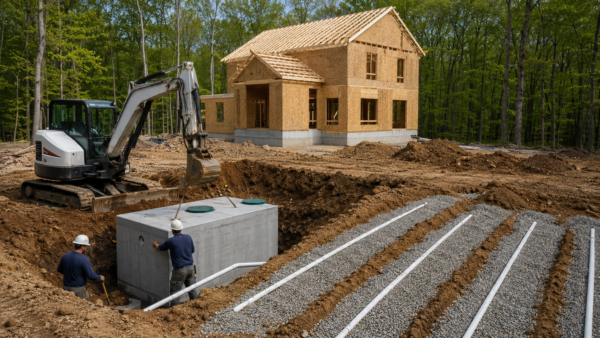
If you are building a home in New Jersey without access to a public sewer, the septic system is one of the first—and potentially most expensive—site-development questions you need to answer. One contractor may provide an early estimate of $20,000 while another projects $45,000 or more. That difference does not necessarily mean someone is overcharging. It usually means the estimates are based on different assumptions about the soil, groundwater, system design and services included.
This guide explains what a new construction septic system costs in New Jersey, what determines the design, when installation occurs during the building process and what must be approved before excavation begins.
Quick answer: A complete residential septic system for new construction in New Jersey commonly costs approximately $20,000 to $45,000. A conventional gravity system on favorable soil may cost less, while mound systems, pressure distribution and advanced treatment systems can reach or exceed the upper end of that range. Soil testing, engineering, permitting and installation should all be accounted for when comparing quotes.
How Much Does a New Construction Septic System Cost in NJ?
There is no reliable way to price a new septic system from the home’s square footage alone. The final cost depends on the approved design and the conditions found below the surface.
These planning ranges reflect the costs ATS currently sees for residential projects in New Jersey:
| Project component or system type | Typical planning range |
|---|---|
| Soil profile pits and permeability or percolation testing | $1,000–$2,000 |
| Engineering design and plans | $2,000–$4,000 |
| Local health-department permit and review | $500–$1,500 |
| Other applicable local or building permits | $200–$800 |
| Conventional gravity system | $15,000–$25,000 |
| Pressure-distribution system | $20,000–$35,000 |
| Mound or soil-replacement system | $25,000–$45,000 |
| Advanced treatment or drip-dispersal system | $30,000–$55,000+ |
These numbers should not simply be added together. A complete installation quote may already include testing, engineering, permitting and construction. Other estimates may cover only the physical installation. Ask every contractor to identify exactly what is included.
ATS Environmental provides comprehensive pricing that incorporates engineering, permitting and installation. For a deeper cost breakdown, read our guide to septic-system installation costs in New Jersey.
Why Septic Quotes for the Same Property Can Differ So Much
The disposal field is generally the largest source of cost variability. A conventional field can be relatively straightforward. A mound, pressure-dosed or advanced-treatment system adds equipment, materials, engineering and installation complexity.
Soil permeability
Permeability and percolation testing help determine how quickly the soil can accept wastewater. Favorable sandy or loamy soils may support a conventional design. Dense clay or other slowly permeable soil may require a larger or more specialized field.
Seasonal high groundwater
The disposal field must maintain adequate separation from groundwater and other limiting conditions. When seasonal groundwater is close to the surface, the engineer may need to raise the field or use another approved design.
Bedrock and restrictive soil layers
Shallow bedrock can limit the available treatment depth and affect where the field can be placed. Soil profile pits can identify many of these conditions early, although subsurface conditions may still vary across the lot.
Bedroom count
New Jersey sizes residential septic tanks and calculates design flow based in part on bedroom count—not simply square footage, bathroom count or the number of current occupants.
Under N.J.A.C. 7:9A-8.2, a single-family septic tank must provide at least 250 gallons of capacity per bedroom and may not be smaller than 1,000 gallons. An expansion attic capable of becoming a bedroom is counted in the tank calculation.
Property layout and access
Steep grades, long piping runs, limited equipment access, utility easements, wells, wetlands and property-line setbacks can affect placement and installation costs. The septic plan also has to work with the home, driveway, grading, stormwater features and future improvements.
What the quote includes
An installation-only quote can look substantially lower than an all-inclusive proposal. Before comparing numbers, determine whether each quote includes:
- Soil and site evaluation
- Engineering plans
- Surveying when required
- Permit and review fees
- Tank, distribution components and disposal field
- Pumps, controls and electrical coordination
- Required construction inspections
- As-built plans and final certification
- Backfilling, grading and site restoration
- Rock removal or imported fill
Which Type of Septic System Will Your New Home Need?
The engineer selects a system based on the site evaluation, anticipated wastewater flow and applicable requirements. Homeowners can express preferences, but the property ultimately determines which designs are approvable.
Conventional gravity system
A conventional system uses gravity to move wastewater from the tank to the distribution network and disposal field. It has fewer mechanical components and is generally the least expensive option when soil, slope and groundwater conditions permit it.
Pressure-distribution system
A pressure-distribution system uses a pump to deliver measured doses of effluent throughout the field. Even distribution can help avoid concentrating wastewater in one portion of the absorption area, but the pump, control panel and alarm add cost and maintenance requirements.
Mound or soil-replacement system
A mound or soil-replacement design uses approved fill material to create sufficient treatment area or separation where existing soil conditions are unsuitable for a standard field. These systems require more material, site work and engineering than a conventional installation.
Advanced wastewater treatment
An advanced treatment unit treats wastewater before it reaches the disposal field. It may be used with pressure distribution or drip dispersal on constrained or environmentally sensitive properties. These systems can require electrical equipment, monitoring and ongoing maintenance agreements.
If clay or poor permeability is the primary challenge, see our guide to septic-system design for clay soils in Northern New Jersey.
When Is the Septic System Installed During New Construction?
The septic planning process begins well before the tank and field are installed. The exact construction sequence should be coordinated among the owner, builder, engineer, septic installer and local administrative authority.
- Confirm that the property can support a septic system.Soil profile pits and permeability or percolation testing identify soil horizons, groundwater indicators, bedrock and other conditions used in the design. The local administrative authority generally witnesses this work unless the witnessing requirement is waived.
- Design the system around the approved home plan.A New Jersey licensed professional engineer prepares the septic design using the site results, bedroom count, property survey, grading and required setbacks.
- Submit the application and obtain the permit.The administrative authority reviews the plans and may request revisions. Septic construction cannot begin until the applicable permit has been issued.
- Coordinate the installation with the building schedule.The system is commonly installed after the foundation and major site grades have been established but while the property remains accessible to excavation equipment. The ideal sequence varies by property and builder.
- Install the tank, distribution system and field.Once permits and site conditions are ready, physical installation often takes approximately four to seven working days. Rock, groundwater, weather and system complexity can extend that schedule.
- Complete the required inspection before backfilling.The system components must remain visible until the required inspection has been completed and permission to backfill has been granted. Covering an unapproved system can result in an order to reopen it.
- Obtain the certificate of compliance.The septic system cannot be placed in operation until the administrative authority issues its certificate of compliance. A copy is also provided to the municipal official responsible for occupancy permits.
ATS estimates that many straightforward septic projects can move from initial work through final inspection in approximately four to eight weeks. New construction can take longer when surveying, plan revisions, environmental approvals, seasonal site conditions or broader construction scheduling are involved. Begin the septic process as early as possible rather than building the project calendar around the shortest possible timeline.
New Jersey Septic Permit and Design Requirements
Individual residential septic systems are governed primarily by New Jersey’s Standards for Individual Subsurface Sewage Disposal Systems, N.J.A.C. 7:9A. NJDEP establishes the statewide standards, while local or county health departments generally review and permit systems discharging 2,000 gallons per day or less.
A new construction application ordinarily includes:
- Soil logs and testing results
- Soil-suitability determinations
- Expected daily wastewater flow
- Engineering plans and design calculations
- The location of the tank, distribution network and disposal field
- Property boundaries, topography and proposed structures
- Nearby wells, surface water, wetlands and groundwater seepage
- Applicable setbacks and environmental constraints
A reserve or replacement area may also be required depending on the proposed technology and local ordinance. Do not assume that every municipality applies the same reserve-area standard. Confirm the requirement with the engineer and administrative authority before positioning the house, driveway, pool or other permanent improvements.
Properties affected by freshwater wetlands, flood hazards, the Highlands, the Pinelands or other regulated resources may require additional review beyond the ordinary septic permit.
Homeowners can review the NJDEP septic permitting information, the full N.J.A.C. 7:9A standards and NJDEP’s plain-language septic FAQ.
Soil and Site Conditions in Northern New Jersey
Conditions vary from property to property, but new construction projects in Sussex, Morris, Warren and other northern counties frequently encounter combinations of clay, glacial till, shallow bedrock, steep terrain and seasonal groundwater.
Clay and glacial till
Dense, slowly permeable soil can limit the use of conventional disposal fields. Pressure distribution, imported fill or a raised design may be needed to provide adequate treatment and dispersal.
Shallow bedrock
Bedrock can restrict field depth and reduce the usable portion of the lot. Test pits should be completed before finalizing the building footprint because moving the field later can affect the entire site plan.
Seasonal groundwater
Low-lying land and properties near lakes, streams or wetlands may show evidence of seasonal saturation. The engineer must account for the applicable vertical separation and any related environmental restrictions.
Additional land-use review
Properties in regulated areas may need approvals that go beyond the ordinary local septic permit. A parcel that appears large enough on a survey can still have a limited buildable area after wetlands, buffers, slopes, wells, easements and septic setbacks are considered.
Costly Mistakes to Avoid When Planning a New Septic System
- Purchasing land without septic due diligence. Make the land purchase contingent on satisfactory soil and septic evaluations whenever possible.
- Finalizing the house before evaluating the site. The home, driveway, well, septic field and grading all compete for usable space.
- Changing the bedroom count after approval. Adding a bedroom or expansion attic can affect tank capacity, design flow and disposal-field sizing.
- Comparing quotes with different scopes. An installation-only estimate should not be compared directly with a proposal that includes engineering and permits.
- Building over a required septic or reserve area. Driveways, additions, pools and permanent structures can interfere with approval and future system access.
- Assuming the shortest review time. Plan revisions and supplemental approvals are normal parts of new construction.
- Backfilling before authorization. The system may have to be uncovered if required components were concealed before approval.
- Ignoring exclusions. Ask whether electrical work, blasting, dewatering, well work, driveway restoration and finished landscaping are included.
How ATS Handles New Construction Septic Installation
ATS Environmental has installed septic systems across New Jersey for more than 30 years. Our goal is to give homeowners and builders a clear path from site evaluation through final approval.
- Fast initial pricing: We can provide preliminary guidance quickly once we have the property and project details.
- All-inclusive proposals: Engineering, permit coordination and installation are incorporated into one project scope.
- Health-department coordination: We manage submissions, revisions and required construction-stage inspections.
- Complete project documentation: Owners receive the approved plans and final system documentation needed for future maintenance and property transfers.
- New Jersey site experience: We understand the clay, bedrock, groundwater and access challenges encountered throughout the state.
The inspections performed during construction are regulatory installation inspections and should not be confused with an independent septic inspection conducted for a real-estate transaction.
Once your system is operational, understanding how long a septic drain field lasts can help you protect the investment through appropriate maintenance and water-use practices.
Frequently Asked Questions
How much does a new septic system cost in New Jersey?
A complete residential system commonly costs approximately $20,000 to $45,000. Favorable soil may allow a less expensive conventional system, while mound, pressure-distribution, advanced-treatment and drip-dispersal systems can cost more. The only reliable quote is one based on site conditions and a defined project scope.
What size septic system does a new house need?
New Jersey bases residential design partly on bedroom count. A septic tank must provide at least 250 gallons of capacity per bedroom and cannot be smaller than 1,000 gallons. Expansion attics are counted as additional bedrooms. The engineer also calculates the required disposal-field size using design flow and soil-test results.
How long does new construction septic installation take?
The physical installation often takes approximately four to seven working days after approvals are in place. Soil evaluation, engineering, municipal review, revisions and final certification make the overall process considerably longer. Many straightforward projects take several weeks, while complex sites can take several months.
What happens if the property does not pass a conventional perc test?
An unfavorable result does not automatically make the property unbuildable. It may mean that a conventional gravity field is not appropriate. An engineer can evaluate alternatives such as pressure distribution, soil replacement, a mound system or advanced treatment. Wetlands, setbacks, lot size and other restrictions still have to be considered.
When is the septic system installed while building a house?
The soil evaluation, design and permit should be completed early in the project. Physical installation is commonly coordinated after the foundation and major grades are established but before finished driveways and landscaping restrict equipment access. The system must be inspected and certified before it is placed in use.
Is financing available for a new septic system?
New construction septic costs are often incorporated into a construction loan. ATS may also offer financing options for qualifying septic projects. Availability, limits and terms can change, so discuss financing with ATS and your construction lender early in the planning process.
Find Out What Your Property Can Support
If you are evaluating land, designing a new home or comparing septic proposals, begin with actual site information rather than an assumed system type. Soil conditions, groundwater, bedroom count and the usable property layout determine what can be approved and what the project will cost.
ATS Environmental provides new septic-system installation in New Jersey with engineering and permit coordination included. Call 800-440-8265 or contact ATS Environmental with your lot and construction details.
Last updated: August 2026