


What Does a Failed Underground Oil Tank Test Mean in New Jersey?
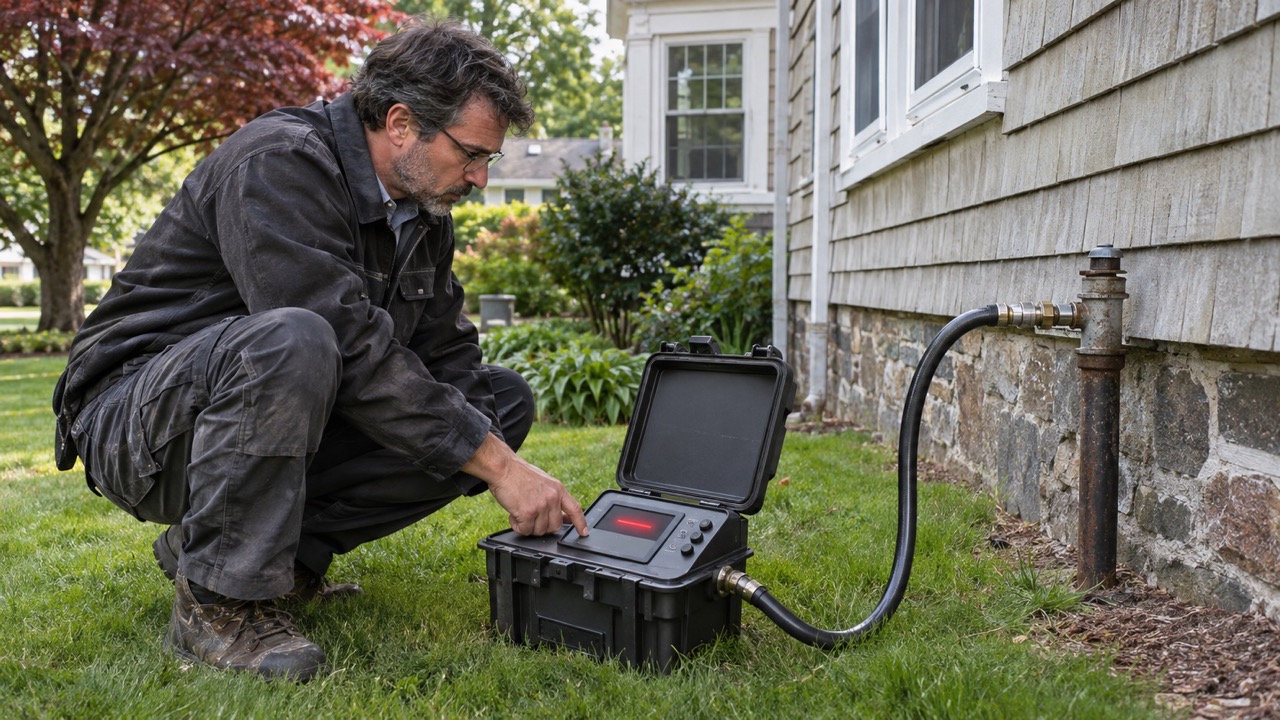
A failed underground oil tank test can create immediate concern, especially when the result arrives during a New Jersey home sale. The most important thing to understand is that a failed result indicates a possible integrity problem, but it does not automatically prove that heating oil entered the surrounding soil or groundwater.
ATS Environmental has performed underground tank testing throughout New Jersey for more than 30 years. The next step is to review how the tank was tested, identify whether the result points to the tank or its piping, and determine whether repair, retesting, soil evaluation, or removal should be considered.
Have a failed report and a closing deadline? Send ATS the report, property address, and applicable deadline through our online contact form or call 800-440-8265.
Quick Answer: What Does a Failed Oil Tank Test Mean?
A failed underground oil tank test means the system produced a result outside the testing method’s pass criteria. It indicates a possible problem involving the tank, fill or vent piping, fittings, or connections. It does not, by itself, establish where the problem is or whether petroleum has affected the soil or groundwater.
A qualified tank-testing professional should review the test method and result, determine the probable source, and explain whether the appropriate next step is repair and retesting, further environmental evaluation, or tank removal.
Does a Failed Tank Test Mean the Oil Tank Is Leaking?
Not necessarily. A tank-tightness test evaluates the integrity of the tank system within the scope of the testing method. If the tank and associated piping are tested together, a failed result may originate from several possible locations.
Common causes include:
- A leaking vent or fill pipe: Corrosion or a loose connection in the piping can cause the system to fail even when the tank body remains intact.
- A damaged fitting or connection: Some failures can be traced to a localized, repairable component.
- A tank-body integrity problem: Buried steel tanks may corrode over time, particularly where soil and moisture remain in contact with the exterior.
- An inconclusive or questionable result: Site conditions, testing setup, background noise, equipment limitations, or an unsuitable method can affect the result.
ATS uses MESA 2D digital underground oil tank testing to help distinguish signals associated with the piping or upper portion of the system from a potential problem in the fuel-filled portion of the tank.
What a Failed Test Cannot Tell You by Itself
A failed result alone does not determine:
- Whether heating oil entered the surrounding soil
- Whether groundwater or a nearby drinking-water well was affected
- How much soil may require investigation or cleanup
- Whether the problem can be repaired
- What removal or remediation will cost
Those questions require a review of the test report, the tank system, property conditions, and any additional field or laboratory evidence.
Why a Water Check Is Not the Same as Tank-Integrity Testing
An oil company may check whether water is present inside the tank, but that is not the same as testing the tank system’s integrity.
A tank located above the groundwater table can develop a hole without taking on water. Conversely, water may enter through a fill or vent pipe rather than through the tank body. A water check can provide useful information, but it should not be treated as a complete tank-tightness test.
Warning Signs That May Indicate a Tank Problem
According to the NJDEP, potential warning signs include:
- An unexplained increase in heating-oil consumption
- Water inside the tank
- Repeated oil-burner problems
- Petroleum odors away from the burner
- Oil staining on basement walls or floors
- An oily sheen in a sump, French drain, drainage ditch, or nearby water
- Stressed or dead vegetation near the tank
- Unusual tastes or odors in private well water
If these conditions accompany a failed result, tell the testing professional immediately.
What to Do After an Underground Oil Tank Fails a Test
1. Review the Written Test Report
Do not rely on a verbal statement that the tank “failed.” Request the complete report and confirm:
- Which testing method was used
- Whether the tank and piping were tested together
- Whether the result was failed or inconclusive
- Which portion of the system may have produced the result
- Whether repair, retesting, or additional evaluation was recommended
ATS provides test results on site and a written pass-or-fail report within one business day.
2. Determine Whether the Tank or Piping Caused the Result
This distinction can materially change the scope of work. A vent pipe, fill pipe, fitting, or connection may be repairable. A confirmed tank-body integrity problem is more likely to lead the property owner, buyer, lender, or insurer to favor removal.
If the original report does not identify the probable source, ask whether additional diagnostic testing can isolate it.
3. Repair and Retest When Appropriate
If a repairable pipe or fitting caused the failed result and there is no evidence of a petroleum release, the component may be repaired and the system retested.
A passing retest and documentation of the repair should be retained with the property records. Repairability depends on the condition of the complete system and the requirements of the property owner, buyer, lender, insurer, and municipality.
4. Determine Whether Soil Testing Is Warranted
Laboratory soil testing is not automatically required after every failed tank test. It may be appropriate when:
- The result points to a possible tank-body leak
- Petroleum odors, staining, stressed vegetation, or other warning signs are present
- A field screening indicates possible petroleum impacts
- The property is part of a real estate transaction and additional documentation is requested
- The environmental professional recommends further investigation based on the tank and site conditions
Properly designed soil testing around an underground oil tank evaluates selected locations and depths for petroleum impacts. ATS uses an independent state-certified laboratory, with reporting generally available in about five business days.
Soil results characterize the areas sampled. They should not be described as an absolute guarantee that no contamination exists anywhere else on the property.
5. Evaluate Removal if the Tank Body Has Failed
A confirmed tank-body integrity problem commonly leads to tank removal, particularly during a property transaction. Removal allows the tank and excavation to be examined directly and prevents the damaged tank from remaining in service.
New Jersey does not automatically require every residential heating-oil tank to be removed when no discharge is indicated. The decision may nevertheless be affected by the tank’s condition and the requirements of the buyer, lender, insurer, or municipality.
If removal is recommended, use a closure-certified individual working for an NJDEP-certified underground-storage-tank firm. Contact the municipal construction office to determine the permit and inspection requirements for the proposed work.
6. Keep the Final Documentation
If no discharge is identified, retain the applicable:
- Original tank-test report
- Repair invoice and passing retest
- Municipal permit closeout or Certificate of Approval
- Contractor records and photographs
- Tank disposal documentation
- Any soil-screening or laboratory results produced
If a discharge was reported and remediated, also retain the NJDEP No Further Action letter and supporting remediation documents.
Does a Failed Tank Test Have to Be Reported to NJDEP?
A failed test does not automatically create an NJDEP remediation case. New Jersey reporting requirements are triggered when a discharge is discovered.
Residential heating-oil tanks are generally treated as Unregulated Heating Oil Tanks, or UHOTs. “Unregulated” means that NJDEP generally does not regulate the tank’s normal operation in the same way it regulates many commercial underground-storage tanks. NJDEP does oversee investigation and cleanup after a discharge is discovered.
Evidence of a reportable discharge may include:
- A hole in an active or merely out-of-service tank
- Oil staining in the excavation
- Oil in contact with soil or groundwater
- Petroleum odors associated with the excavation
- Elevated field-instrument readings
- Laboratory results detecting petroleum impacts
When a discharge is discovered, it must be reported immediately to the NJDEP Hotline at 1-877-WARNDEP (1-877-927-6337). The NJDEP UHOT FAQs explain the applicable reporting, contractor, sampling, and remediation requirements.
Investigation and remediation must be directed by an appropriately credentialed environmental professional, such as a certified subsurface evaluator working for a certified firm or a Licensed Site Remediation Professional.
When Is an NJDEP No Further Action Letter Issued?
An NJDEP No Further Action letter closes the heating-oil discharge case after the required investigation or remediation has been completed and documented.
NJDEP does not issue an NFA letter for every clean tank removal. If no evidence of a discharge is found and the tank passes the required municipal inspection, the municipal closeout documents generally serve as the principal closure record.
What May the Next Steps Cost, and How Long Can They Take?
There is no single cost or timeline for resolving a failed tank test. A repairable piping problem is very different from a tank-body failure involving affected soil or groundwater.
Factors affecting the cost include:
- Whether the tank, piping, fitting, or testing conditions caused the result
- Whether repair and retesting are possible
- Tank size, depth, location, and accessibility
- Whether laboratory soil testing is recommended
- The volume and depth of any affected soil
- Whether groundwater or a private well requires evaluation
- Municipal permit and inspection requirements
- Documentation required for a real estate transaction
A diagnostic review, piping repair, or retest may be resolved relatively quickly. Soil laboratory results generally require about five business days. Tank removal, remediation, groundwater investigation, and NJDEP case closeout are site-specific and may take substantially longer.
Ask for a written scope explaining what is included, what question the work will answer, the expected reporting time, and what additional work could become necessary.
Handling a Failed Oil Tank Test During a New Jersey Home Sale
A failed test can delay a transaction, but it does not automatically end the sale. Buyers, sellers, attorneys, lenders, and insurers generally want a clear explanation of what failed and documentation showing how the issue was resolved.
Depending on the findings and contract, the parties may negotiate:
- Repair and retesting before closing
- Additional soil evaluation
- Tank removal before closing
- Completion of remediation and NJDEP closeout
- A closing extension
- A credit, escrow, or another attorney-approved arrangement
Responsibility for the work is not determined by the failed result alone. Buyers and sellers should have their real estate attorneys structure any investigation, access, payment, escrow, or closing terms.
If the tank’s history is unclear in addition to the failed result, read what to do when oil tank removal records are missing.
Why Choose ATS After a Failed Underground Tank Test?
ATS Environmental combines more than 30 years of New Jersey experience with digital tank testing and laboratory soil evaluation.
- MESA 2D digital acoustic testing designed to evaluate the tank system safely and efficiently
- Tank-versus-piping evaluation to help identify the probable source of the failed result
- On-site test results followed by a written report within one business day
- Independent laboratory soil analysis when additional environmental evaluation is warranted
- Clear explanations of what the result establishes, what it does not establish, and what to consider next
- Experience with real estate deadlines involving buyers, sellers, attorneys, and inspection contingencies
ATS uses a third-party-evaluated digital acoustic tank-tightness testing method. We do not describe a failed result as a confirmed environmental release until the available evidence supports that conclusion.
Failed Oil Tank Test FAQs
Does a Failed Oil Tank Test Always Mean the Tank Leaked?
No. The result may originate from the tank body, vent pipe, fill pipe, fitting, or another connection. The testing method and report should be reviewed before deciding what failed or whether petroleum entered the environment.
Can a Vent or Fill Pipe Cause a Failed Tank Test?
Yes. A corroded pipe, damaged fitting, or loose connection can cause the complete system to fail a test even if the tank body remains intact. A repair and retest may be appropriate when the source is isolated and there is no evidence of a discharge.
Does a Failed Result Have to Be Reported to NJDEP?
Not automatically. NJDEP reporting is required when a discharge is discovered. If a tank hole, contaminated soil, petroleum odor, elevated field reading, or laboratory result establishes a discharge, it must be reported immediately.
Is Soil Testing Required After Every Failed Tank Test?
No. Soil testing may be recommended when the result or site conditions indicate a possible tank leak or environmental release. It may not be necessary when a repairable piping problem is identified and no evidence suggests that oil entered the environment.
Can a Failed Tank Be Repaired and Retested?
Sometimes. Piping, fittings, and connections may be repairable. A tank-body integrity problem is less likely to be treated as a minor repair and may lead to removal, particularly during a property transaction.
Will a Failed Oil Tank Test Stop a Home Sale?
It can delay a closing, but it does not automatically end the transaction. A clear diagnosis, appropriate corrective work, and complete documentation give the parties more options for resolving the issue.
What Documents Should I Keep After the Problem Is Resolved?
Keep the original test report, repair and retest documentation, municipal permits and approvals, contractor records, photographs, disposal records, and any soil results. If a discharge was remediated, retain the NJDEP No Further Action letter and supporting reports.
Send ATS Your Failed Tank-Test Report
If an underground oil tank failed testing, you should not have to guess whether the problem involves the piping, tank body, or surrounding soil. ATS can review the result and explain the appropriate next step.
For the most useful response, provide:
- The complete tank-test report
- The property address
- The tank location and approximate size, if known
- Whether the tank is currently in service
- Any available photographs or prior records
- Your inspection-response or closing deadline
Call 800-440-8265 or contact ATS Environmental online for help understanding a failed underground oil tank test.