


NJ Septic Regulations for 2026: What’s Changed?
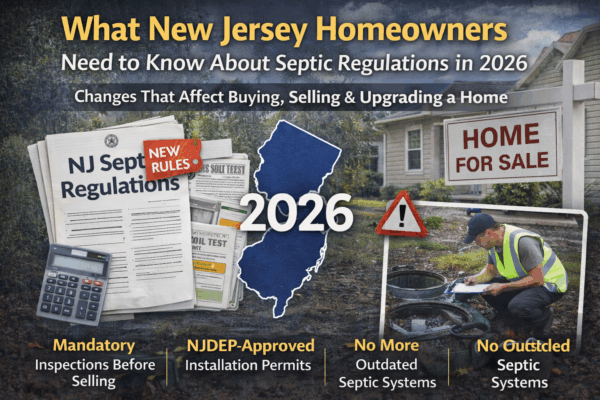
What New Jersey Homeowners Need to Know About Septic Regulations in 2026
Thinking about buying, selling, or upgrading a home with a septic system in New Jersey? The rules just got more complicated. New Jersey’s septic regulations continue to evolve in 2026, with stricter enforcement around property transfers, updated permitting requirements, and expanded compliance mandates that affect thousands of homeowners across New Jersey. Whether you’re dealing with a real estate transaction or planning a system upgrade, understanding these regulations isn’t optional; it’s the difference between a smooth process and a compliance nightmare that could cost you thousands.
Quick Answer:
NJ septic regulations for 2026 focus on three main areas: mandatory property transfer inspections in most counties, stricter permitting requirements for installations and repairs, and expanded environmental protection standards for systems near water bodies. All septic installations require NJDEP-approved engineering plans, soil testing, and health department permits. Systems installed before current codes may be grandfathered but must be upgraded if they fail or if the property undergoes significant changes. Homeowners selling properties should expect inspection requirements, while buyers need to verify system compliance before closing. Costs for compliance typically range from $500-$2,000 for inspections to $15,000-$35,000 for full system replacements.
What Homeowners Need to Know First
Here’s the reality: New Jersey doesn’t have one unified septic code that applies everywhere equally. Instead, you’re dealing with a layered system of state regulations through NJDEP, county health department rules, and sometimes even township-specific requirements.
The three most important things to understand right now:
- Property transfers trigger inspections. Most NJ counties might require a septic system certification before you can sell a home with an on-site system.
- All installations require engineering. You can’t just hire any contractor to dig a hole and drop in a tank. New Jersey requires licensed engineer approval for septic system designs, soil testing, and proper permitting through local health departments.
- “Grandfathered” doesn’t mean “exempt.” Your 1970s septic system might be legal right now, but the moment it fails or you want to add a bedroom to your house, you’re upgrading to current code standards.
The biggest mistake we see homeowners make? Assuming their old system is fine because it’s been working for decades. Working and compliance are two very different things in New Jersey.
Property Transfer Requirements in 2026
Do you need a septic inspection when selling your NJ home?
In most cases, yes. New Jersey counties all have property transfer inspection recommendations, though the specific rules vary by municipality.
What the inspection covers:
Your septic inspection for property transfer must verify that the system is functioning properly, meets capacity requirements for the home’s bedroom count, and shows no signs of failure or environmental contamination. Inspectors examine the tank condition, baffles, distribution box, drain field performance, and overall system adequacy.
Can you sell with a failing system?
Legally, yes, but practically, it’s complicated. You must disclose known defects to buyers. Most mortgage lenders won’t approve financing for homes with failed septic systems, which means you’re limited to cash buyers or you need to handle repairs before closing. Either scenario typically reduces your sale price by more than the repair cost.
Buyer walkaway rights:
If a septic inspection reveals problems, buyers in New Jersey can typically walk away from the transaction if their contract includes a septic inspection contingency (most do). Smart buyers make the inspection a condition of purchase, protecting themselves from inheriting a $20,000-$35,000 replacement project.
Timeline considerations:
Schedule your pre-listing septic inspection at least 30-45 days before you plan to list the property. If problems are found, you’ll need time to get repair estimates, obtain permits, and complete work before closing. Rushed septic compliance during a real estate transaction creates delays and added costs.
Septic System Installation and Repair Permit Requirements
What requires a permit in New Jersey?
All new septic installations, complete system replacements, drain field expansions or repairs, tank replacements, and any modifications exceeding $1,000 in value require permits from your local health department. Simple pumping and minor repairs like baffle replacement typically don’t require permits.
The septic permitting process:
Step 1: Soil testing and percolation tests by an approved professional ($500-$1,500). These determine your soil’s ability to handle wastewater treatment and dictate what type of system you can install.
Step 2: Engineering design by a licensed engineer ($2,000-$4,000 if purchased separately). The engineer creates plans showing tank size, drain field layout, setback distances from wells and property lines, and compliance with all applicable codes.
Step 3: Health department review and approval ($300-$1,000 in permit fees). Your county health department reviews the engineering plans, may request revisions, and eventually issues a permit authorizing installation.
Step 4: Installation with required inspections. The contractor cannot backfill until health department inspectors verify proper installation at each critical stage.
Step 5: Final inspection and approval confirming the system meets all code requirements and is ready for use.
How long does this take?
In New Jersey expect 4-12 weeks from initial soil testing to final permit approval, depending on complexity and time of year. Winter applications often take longer due to frozen ground conditions affecting soil testing.
Grandfathering Rules and Mandatory Upgrades
What does “grandfathered” actually mean in NJ?
A grandfathered septic system was legally installed under the codes in effect at the time but doesn’t meet current standards. As long as it continues functioning properly and you don’t trigger certain changes to the property, you can keep operating it.
When grandfathering ends and upgrades become mandatory:
- System failure. If your drain field fails, you’re replacing it to current code standards, not the 1975 version.
- Property additions. Adding a bedroom requires proving your system has adequate capacity. If it doesn’t, you’re upgrading before you can add the room.
- Compliance violations. Health department orders for failing systems require upgrades to current standards.
- Property subdivision. Splitting your property into separate lots typically triggers system compliance review.
What about systems that were never permitted?
Unpermitted septic systems are a bigger problem. If your system was installed without proper permits, common in older rural properties, you may face enforcement action requiring full replacement regardless of whether it’s working properly. Unpermitted systems discovered during property transfers typically must be brought into compliance before sale can proceed.
The cost difference:
Repairing a grandfathered system to keep it limping along: $1,000-$5,000. Replacing it to current code when it finally fails: $15,000-$35,000. The math suggests proactive replacement makes sense for systems approaching 25-30 years old, especially if you’re planning to sell within 5-10 years.
Environmental Protection Standards
New Jersey takes groundwater protection seriously, and septic regulations reflect that priority.
Enhanced treatment requirements:
Properties located within designated watershed protection areas, near public water supplies, or within 200 feet of surface water bodies face stricter regulations requiring advanced treatment systems that reduce nitrogen and phosphorus discharge.
Common enhanced treatment systems in NJ:
- Aerobic treatment units (ATUs) use oxygen to accelerate bacterial breakdown of waste, producing cleaner effluent than conventional systems.
- Nitrogen-reducing systems incorporate specific designs to minimize nitrogen discharge into groundwater.
- Sand filter systems provide additional filtration and treatment beyond conventional drain fields.
Cost implications:
Enhanced treatment systems cost $20,000-$40,000 installed, compared to $15,000-$25,000 for conventional systems. They also require annual maintenance contracts ($200-$500/year) and electrical power to operate pumps and aerators.
Setback requirements:
All NJ septic systems must maintain minimum distances from wells (50-100 feet), property lines (10 feet), surface water bodies (50-100 feet), and buildings (10-25 feet). Properties with inadequate setbacks face significant challenges and may require variance applications or alternative system designs.
County-by-County Variations in NJ
Sussex County enforces NJDEP standards plus additional requirements for properties with challenging soil conditions (clay is common here). The Sussex County Board of Health handles all permitting and requires licensed professionals for soil testing and engineering.
Morris County has similar base requirements but stricter enforcement around watershed protection areas. Properties near lakes and reservoirs face enhanced treatment requirements.
Warren County follows state standards with emphasis on protecting the Delaware River watershed. Properties in certain zones require nitrogen-reducing systems.
The important point: Don’t assume what worked for your neighbor’s property in the next county will work for yours. Each county health department has specific procedures, timelines, and sometimes additional requirements beyond state minimums.
Costs and Timeline Expectations
What does septic compliance actually cost in New Jersey?
Pre-purchase inspection: $400-$800 for comprehensive evaluation including tank pumping and drain field assessment.
Soil testing and perc tests: $500-$1,500 depending on property size and complexity.
Engineering design: $2,000-$4,000
Permits and fees: $300-$1,000 for health department permits and related fees.
System installation: $15,000-$35,000 depending on system type, property conditions, and site challenges.
Timeline expectations:
- Inspection scheduling: 3-7 days
- Inspection completion and report: 1-2 weeks
- Soil testing: 1-2 weeks
- Engineering design: 2-4 weeks
- Health department review: 4-8 weeks
- Installation: 1-2 weeks
- Final inspection and approval: 1-2 weeks
Total timeline from start to finish: 12-20 weeks for complete new installation. Emergency replacements for failing systems can sometimes be expedited, but expect minimum 6-8 weeks even with fast-tracking.
How ATS Environmental Handles Compliance
We’ve been navigating New Jersey septic regulations for over 30 years. Here’s how we make compliance simple for homeowners in New Jersey:
All-inclusive permitting. We handle soil testing, engineering, health department applications, and all inspections. You never call government offices yourself, that’s our job.
Engineering included. Unlike competitors who charge $2,000-$4,000 separately for engineering plans, we include complete engineering design with every installation. You save thousands and avoid coordinating multiple contractors.
Compliance expertise. We know Sussex County Health Department requirements, Morris County watershed rules, and Warren County environmental standards. We design systems that pass inspection the first time, avoiding delays and revision costs.
Transparent pricing. Our quotes include everything: engineering, permits, soil testing, installation, inspections, and site restoration. No surprises, no hidden fees, no separate engineering bills showing up later.
Fast response. We provide initial consultations within 48-72 hours and can typically begin soil testing within one week of contract signing. For real estate transactions with tight timelines, we prioritize accordingly.
Frequently Asked Questions About Septic System Permits and Compliance
Are homemade septic tanks legal in New Jersey?
No. All septic tanks must be manufactured to NSF/ANSI standards and approved by NJDEP. Homemade concrete, brick, or metal tanks don’t meet current codes and must be replaced if discovered.
Can I replace my septic tank myself to save money?
No. New Jersey requires licensed contractors and professional engineering oversight for all septic installations. DIY septic work is illegal and creates liability issues if it fails or contaminates groundwater.
How often must I inspect my septic system in NJ?
For normal residential systems, there’s no mandatory ongoing inspection requirement unless you’re selling the property. However, regular maintenance inspections every 3-5 years are smart practice to catch problems early.
What happens if my septic system fails inspection before a home sale?
You have several options: repair the system and get re-inspected, negotiate a price reduction with the buyer to cover repair costs, provide a credit at closing for the buyer to handle repairs, or sell as-is to a cash buyer (typically reduces sale price more than repair costs).
Do cesspool systems still exist in New Jersey?
Some older properties still have cesspools (simple holding tanks without treatment), but they’re not legal for new installations. Existing cesspools can continue operating until they fail, at which point replacement with a proper septic system is required.
What to Do Next
If you’re buying, selling, or upgrading a property with a septic system in New Jersey, here’s your action plan:
For sellers: Schedule a pre-listing septic inspection now, before you list the property. Finding and fixing problems before buyers discover them gives you control over the process and avoids deal-killing surprises during negotiations.
For buyers: Make septic inspection a contingency in your purchase offer. Never waive septic inspection to make your offer more competitive; you may be risking a $20,000-$35,000 surprise after closing.
For current homeowners: If your system is 20+ years old or showing warning signs (slow drains, odors, wet spots over the drain field), get it inspected proactively. Planned replacements cost less and cause less disruption than emergency failures.
Ready to ensure your septic system complies with NJ regulations? ATS Environmental provides comprehensive septic installations and compliance services throughout New Jersey. We handle all engineering, permitting, and health department coordination so you don’t have to navigate the bureaucracy yourself.
Contact us today for a free consultation. We’ll assess your situation, explain your options, and provide transparent pricing with no hidden fees. Over 30 years of experience means we’ve handled every compliance scenario in New Jersey, let us handle yours.