


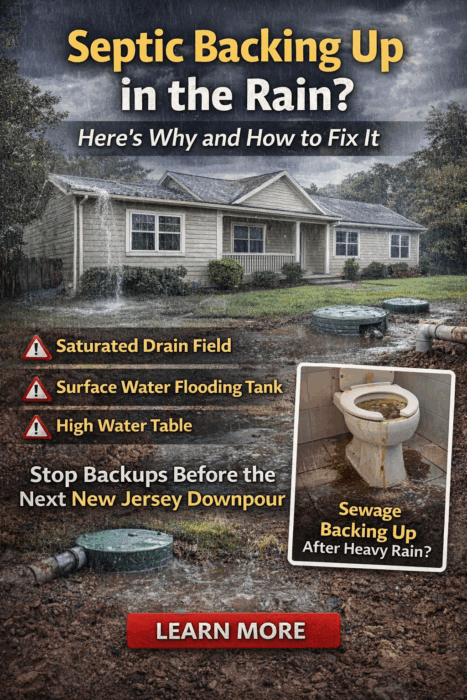
Septic Backing Up in the Rain? Here’s Why and How to Fix It
Why Septic Systems Back Up During Heavy Rain in New Jersey
You just survived another New Jersey downpour, and now your toilet’s gurgling, your shower’s draining slowly, or worse; sewage is backing up into your basement. If your septic system only acts up when it rains, you’re not dealing with a coincidence. Heavy rain doesn’t cause septic backups out of nowhere, it exposes existing problems that were already there. Here’s what’s actually happening underground and how to fix it before the next storm.
Quick Answer
Can heavy rain cause septic backups?
Yes, but rain itself isn’t the problem – it’s the trigger. When your septic tank backs up during or after heavy rain, it’s usually because:
- your drain field soil is already saturated and can’t absorb more water,
- surface water is flooding into your tank through cracks or the lid, or
- your system was already failing and rain pushed it over the edge.
A healthy, properly maintained septic system should handle normal New Jersey rainfall without backing up.
What Homeowners Actually Want to Know First
Is this an emergency, and is my family at risk?
If you’re seeing sewage backing up into your home, yes, stop using all water immediately. Sewage contains harmful bacteria that can make you sick. If it’s just slow drains or gurgling, you have time to diagnose the problem.
Will this flooded septic fix itself when the rain stops?
Sometimes, yes. If your only problem is saturated drain field soil, things might return to normal within 24-72 hours after rain stops. But if backups happen every time it rains, you have a structural problem that won’t fix itself.
How much is this going to cost me?
That’s the question keeping you up at night, right? Here’s the honest answer:
- If it’s just saturated soil: Wait it out ($0) or reduce water usage temporarily
- If surface water is getting in: Tank repair or riser installation ($500-$2,000)
- If your drain field is failing: Drain field repair or replacement ($3,000-$15,000)
- If your whole system is shot: Complete replacement ($15,000-$35,000)
The good news? Most rain-related backups are fixable without replacing your entire system.
Why Septic Systems Back Up When It Rains
The Real Problem: Saturated Drain Fields
Your septic drain field needs to absorb and filter wastewater through soil. When it rains heavily, that soil becomes waterlogged. Saturated soil can’t absorb any more liquid, including the wastewater your septic system is trying to discharge.
Think of it like a sponge that’s already soaked. You can’t squeeze more water into it.
What happens next:
- Wastewater backs up into your septic tank
- Your tank fills beyond capacity
- Sewage has nowhere to go except back into your house
- Toilets gurgling after heavy rain is your first warning sign
New Jersey clay soils make this worse. Clay drains slowly even in dry conditions. Add heavy rain and high water tables, and you’ve got the perfect storm for backups.
Surface Water Flooding Your Tank
Here’s what most homeowners don’t realize: rainwater shouldn’t ever enter your septic tank. Your tank is supposed to be watertight. But if you have:
- Cracked tank walls or lid
- Missing or damaged tank riser seals
- Improper grading around your tank
- Roof gutters draining toward your system
…then every rainstorm floods your tank with clean water. This hydraulic overload pushes untreated sewage out into your drain field prematurely.
Your septic tank fills up with rainwater faster than it can process waste. The result? Septic tank backing up into basement or first-floor fixtures.
Your Septic System Was Already Failing
Rain doesn’t break septic systems, it just exposes existing problems. If your system only backs up when it rains, you likely have:
- Drain field already clogged with solid waste (biomat buildup)
- Tank that hasn’t been pumped in 5+ years
- Undersized system for your household
- Tree roots infiltrating your drain field pipes
The rain just fills in whatever remaining capacity you had left. A healthy septic system handles rain. A struggling system doesn’t.
High Water Table Problems
In New Jersey, seasonal high water tables are a fact of life. Spring thaw and fall rains push groundwater levels up.
When groundwater rises above your drain field:
- Soil can’t filter wastewater
- Septic tank full of water when it rains becomes the norm
- System effectively stops working
- Backups are inevitable
This is especially common near low-lying areas.
Immediate Steps When Your Septic Backs Up
Stop using water immediately. No laundry, dishwasher, showers, toilet flushing, or running water. Every gallon you add makes the problem worse.
Check for obvious surface water intrusion:
- Look at your septic tank access area, is water pooling there?
- Check if gutters are draining toward your system
- Look for standing water over your drain field
Don’t use chemical drain cleaners. They won’t fix septic backups and may kill beneficial bacteria in your tank.
Document everything:
- Take photos of standing water, backups, and date/time
- Note when it started relative to rainfall
- This helps with diagnosis and potential insurance claims
Call a professional within 24-48 hours if:
- Sewage is backing into your home
- This is a recurring problem
- You haven’t had your tank pumped in 3+ years
- You’re seeing standing water over the drain field
Temporary fixes that might help:
- Pump your septic tank (this buys you time but doesn’t solve the root problem)
- Reduce water usage by 50% or more until soil dries out
- Divert all roof gutters and sump pumps away from your system
Warning signs this is serious:
- Sewage surfacing in your yard
- Septic smell after heavy rain
- Bright green grass over drain field (even in winter)
- Multiple backups happening in short timeframes
Long-Term Solutions to Prevent Rain-Related Septic Backups
Fix Surface Water Intrusion
This is usually the easiest and cheapest fix:
Repair or replace your septic tank lid ($250-$500)
- Cracked lids let in gallons of water per storm
- Modern risers with rubber gaskets create watertight seals
Install proper drainage around your tank ($500-$2,000)
- French drains or curtain drains divert surface water
- Regrade soil to slope away from tank
- Critical in flat or low-lying properties
Redirect all roof gutters ($250-$500)
- Never let gutters drain within 10 feet of your system
- Install downspout extensions
- This is a DIY fix most homeowners can do
Address Drain Field Saturation
Reduce household water usage permanently:
- Spread laundry loads throughout the week (never do 5 loads in one day)
- Fix leaky toilets and faucets (a running toilet wastes 200+ gallons daily)
- Install low-flow fixtures
- Take shorter showers
Improve drainage around your drain field:
- Install curtain drains uphill from your system
- Create swales to redirect surface water
- Never compact soil over drain field (no vehicles, heavy equipment)
- Consider New Jersey-compliant drainage improvements
Expand drain field capacity ($5,000-$15,000)
- If your soil and property allow it
- Adds additional absorption area
- Requires engineering and permits
Deal with High Water Table Issues
If you have chronic high water table problems, your options are limited:
Install a mound system ($20,000-$35,000)
- Built above ground to avoid saturated soil
- Required in areas with shallow water tables or bedrock
- Common solution in New Jersey
Upgrade to advanced treatment system ($15,000-$30,000)
- Aerobic treatment units can handle more challenging conditions
- Requires annual maintenance contracts
- May be required near protected water bodies
Install curtain drain system ($3,000-$8,000)
- Intercepts groundwater before it reaches your drain field
- Prevents pooling and water damage
- Works well in clay soil areas
Pump More Frequently
If your tank is full of sludge, there’s no room for water during rain events.
Standard recommendation: Pump every 3-5 years. If you have rain backup issues: Pump every 1-2 years Cost: $300-$600 per pumping
This isn’t a permanent fix, but it helps prevent backups while you address the root cause.
New Jersey-Specific Rain and Septic Issues
Clay Soil Challenges
Clay soil percolation rates are notoriously slow. What does this mean?
- Water drains through clay 10-100 times slower than sandy soil
- Your drain field needs to be significantly larger
- Rain saturation lasts days or weeks instead of hours
- Mound systems and engineered solutions are often required
Spring Thaw and Fall Rain Patterns
New Jersey’s worst septic problems happen in:
- March-April: Spring thaw + rain = saturated soil and high water tables
- October-November: Fall rains saturate soil before ground freezes
Plan your pumping schedule around these seasons. Get your tank pumped in late summer or early fall before the wet season hits.
Watershed Restrictions
Properties near watershed protection areas have additional requirements:
- Stricter regulations on system types and setbacks
- May require nitrogen-reducing systems
- Faster permit timelines for emergency replacements
- Higher costs due to specialized equipment needs
High Water Tables
Low-lying areas often have:
- Seasonal water tables that rise within 2-3 feet of surface
- Conventional gravity systems that fail regularly
- Need for alternative system designs
- Professional engineering required for new installations
How ATS Environmental Solves Rain-Related Septic Problems
We’ve spent 30+ years solving difficult septic problems in New Jersey. When you call about rain-related backups, here’s how we help:
Our Repair and Replacement Approach
Step 1: Diagnose the problem
- We evaluate your entire system to identify the root cause
- Check for surface water intrusion issues
- Assess drain field condition and saturation
- Determine if repair or replacement is the right solution
Step 2: Honest assessment and options
- We tell you what’s wrong and what’s causing it
- We explain repair versus replacement options with realistic cost ranges
- We provide multiple solutions when possible
Step 3: Permanent fixes
- Engineering plans are included in our septic installation pricing
- We design systems specific to your property’s soil, water table, and usage
- We handle all permits and health department coordination
- We complete repairs and installations quickly to minimize disruption
What Makes Us Different
Complete service from start to finish:
- Installation of new septic systems
- Repair of existing system components
- Full system replacements
- Septic tank removals
We specialize in difficult New Jersey sites:
- Clay soils that drain poorly
- High water tables
- Small properties with limited space
- Properties near protected water bodies
- Failed systems requiring alternative designs
Transparent, flat-rate pricing:
- No hidden fees
- Engineering included with installations
- All permits and inspections included
- You know the total cost before we start
Fast emergency response:
- We understand rain backups are urgent
- Quick scheduling for emergency situations
- We get you back to normal as fast as possible
Real Solutions We’ve Implemented
Clay soil property: Replaced failing conventional system with pressure distribution design and curtain drain. No more rain backups. Total cost: $22,000 (including engineering, permits, installation, and drainage improvements).
High water table: Installed mound system to get above seasonal water table. The customer went from backups every spring to zero issues in 3 years. Total cost: $28,000.
Surface water intrusion: Diagnosed that 90% of the backup problem was rainwater entering through a cracked lid. Installed riser with watertight seal and regraded around tank. Backups stopped. Total cost: $1,200.
Frequently Asked Questions
How long does it take for a flooded septic to drain after heavy rain?
If your only problem is saturated drain field soil, expect 24-72 hours after rain stops for soil to dry enough to resume normal function. Clay soils in New Jersey can take up to a week. If it’s been 3+ days and you still have problems, the issue isn’t just rain.
Can excessive rain cause a septic backup even in a healthy system?
Rarely. A properly sized, well-maintained system with good drainage should handle normal New Jersey rainfall. Extreme flooding events (like remnants of hurricanes) can overwhelm even healthy systems, but typical spring/fall rains shouldn’t cause backups.
Should I pump my septic tank when it backs up after rain?
Maybe. Pumping creates temporary relief by giving you tank capacity again. But if surface water or groundwater is flooding in, your tank will refill with water within hours or days. Pumping helps if your tank is full of sludge and you need immediate relief while you arrange proper repairs.
What to Do Next
If your septic system backs up every time it rains, ignoring it won’t make it better. Every backup event stresses your system further and increases the risk of complete failure.
Contact ATS Environmental for a solution. We’ll:
- Diagnose the exact cause of your rain-related backups
- Provide honest assessment of repair versus replacement options
- Give you upfront costs with no hidden fees
- Handle all engineering, permits, and installation work
Serving New Jersey with expert septic installation, repair, and replacement services. Engineering plans included with all installations. Transparent pricing. Fast service.
Call 800-440-8265 or contact us online to get help with your rain-related septic problems.
The next rainstorm is coming. Let’s make sure you’re ready for it.